



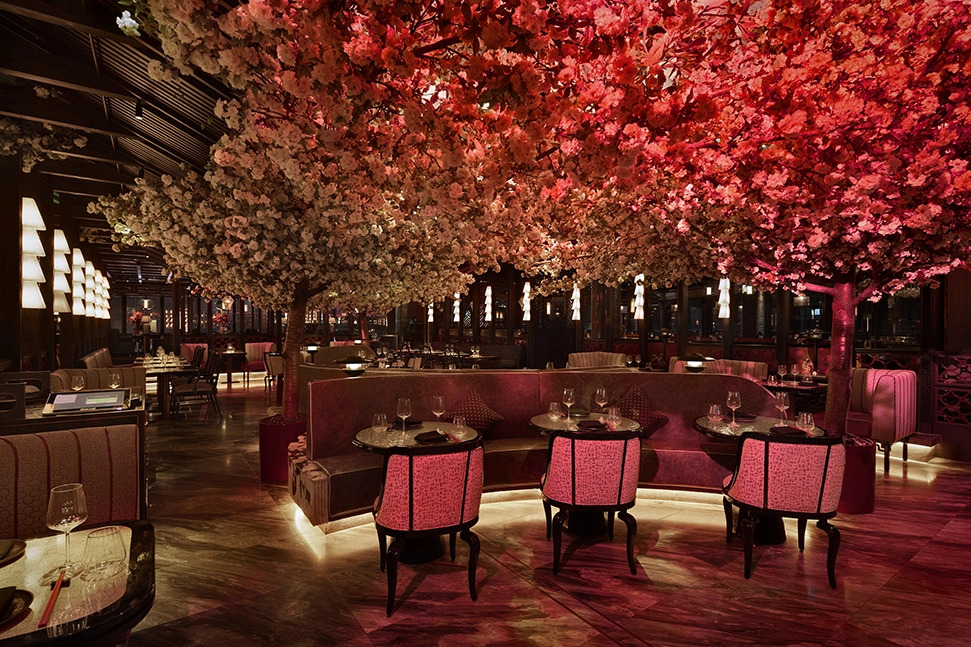
Across Asia, fine dining has moved far beyond tradition into something more immersive, expressive and, in many cases, theatrical. What defines the very top tier is no longer just Michelin stars—it is innovation, storytelling, and experience.
Drawing from globally recognised rankings such as Asia’s 50 Best Restaurants, a clear group of elite destinations consistently sits at the summit of luxury Asian cuisine. Asia’s 50 Best Restaurants is widely regarded as one of the most authoritative benchmarks, with experts voting annually on the continent’s finest dining experiences.
What follows is a refined, editorial-style take on five of the most celebrated luxury Asian restaurants in the world today.
1. Gaggan — Bangkok
The Avant-Garde Benchmark
Consistently ranked as the best restaurant in Asia, Gaggan has redefined what Indian cuisine can be. Chef Gaggan Anand blends molecular gastronomy with bold, playful presentation—often using emoji-inspired tasting menus that turn dinner into performance.
It is not simply dining. It is choreography.
The experience is intimate, experimental and unapologetically modern—arguably the clearest example of how Asian fine dining has moved into the realm of cultural spectacle.
2. The Chairman — Hong Kong
Tradition, Perfected
Where Gaggan disrupts, The Chairman refines.
Often ranked among Asia’s top restaurants, it takes Cantonese cuisine—arguably one of the most established culinary traditions—and elevates it through obsessive attention to ingredient sourcing and technique.
There is no theatrical excess here. Instead, the luxury lies in restraint:
- rare, seasonal ingredients
- precise cooking
- deeply rooted heritage
It is a reminder that innovation in Asia is not always about reinvention—sometimes it is about perfection.
3. Sézanne — Tokyo
Precision at Its Peak
Located in Tokyo’s Four Seasons, Sézanne represents the intersection of French technique and Japanese precision.
It has rapidly climbed global rankings, reflecting Tokyo’s dominance in high-end gastronomy.
Every detail is controlled:
- plating is architectural
- flavours are balanced with near-scientific accuracy
- service is seamless and discreet
This is luxury defined by discipline—quiet, exacting and almost impossibly refined.
4. Mingles — Seoul
Modern Korean Identity, Elevated
Mingles has become one of the defining voices of modern Korean cuisine.
Chef Kang Mingoo reinterprets traditional flavours—particularly fermentation and umami—through a contemporary fine dining lens.
The result is a cuisine that feels both deeply cultural and globally relevant.
It is not trying to imitate Western fine dining.
It is asserting a distinctly Korean identity within it.
5. Odette — Singapore
The Art of Balance
Set within Singapore’s National Gallery, Odette is often described as one of the most complete dining experiences in Asia.
Chef Julien Royer combines French culinary foundations with Asian ingredients and sensibilities, creating menus that feel both elegant and accessible.
Regularly ranked among Asia’s best, it represents the region’s role as a cultural crossroads—where East and West meet without friction.
The Bigger Picture
What ties these restaurants together is not geography, but philosophy.
Across Asia’s luxury dining scene, a few defining themes are emerging:
- Identity over imitation – chefs are drawing from local culture, not European templates
- Experience over consumption – meals are immersive, narrative-driven
- Precision over excess – luxury is increasingly subtle, not ostentatious
The result is a dining landscape that no longer follows global trends—it sets them.
Embedded Video: Inside Asia’s Best Restaurants
The Outlook
Asia is no longer simply a destination for great food.
It is now the epicentre of modern gastronomy.
From Bangkok’s experimental energy to Tokyo’s precision and Seoul’s cultural reinvention, the region is redefining what luxury dining means in a global context.
And if current trends continue, the world will not just be dining in Asia.
It will be learning from it.