



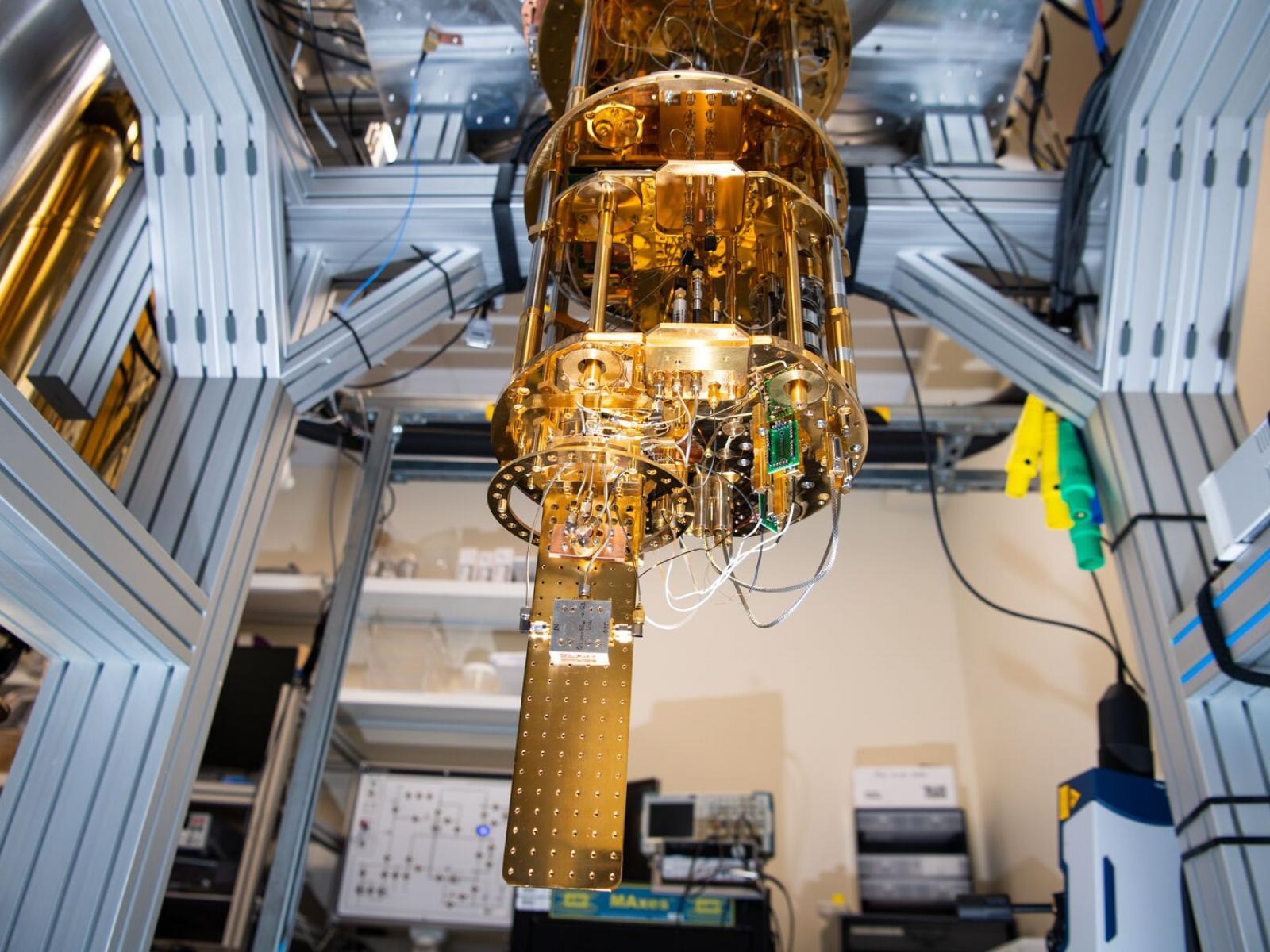
For years, the idea of quantum computers breaking Bitcoin has hovered somewhere between credible risk and distant theory. The narrative has often been simple: once quantum machines become powerful enough, Bitcoin’s foundations could be exposed.
But new academic research, highlighted by CoinDesk, introduces a more grounded reality—one that is far less dramatic in the near term.
To attack Bitcoin’s mining process with a quantum computer, researchers suggest, would require energy on the scale of a star.
That single detail reframes the entire conversation.
The Misunderstood Threat
Much of the public discussion around quantum risk tends to blur two very different things:
- Breaking Bitcoin mining
- Breaking Bitcoin encryption (wallets and keys)
They are not the same problem.
Mining is the process that secures the network through computational work. Encryption, by contrast, protects ownership—your private keys and transactions.
The new research focuses specifically on mining, and its conclusion is clear: even with quantum advantages, the physical requirements spiral into the astronomical.
In practical terms, a quantum attack aiming to dominate Bitcoin’s mining would demand around 10²³ qubits and roughly 10²⁵ watts of power—an energy output comparable to the sun.
That is not just impractical. It is beyond the limits of civilisation as it currently exists.
Why Quantum Mining Breaks Down
Quantum computers are often associated with exponential speed-ups, but in Bitcoin mining, the advantage is far more limited.
The key algorithm in play, Grover’s algorithm, offers a quadratic speed-up, not an exponential one. That distinction matters. It means quantum systems can accelerate brute-force search—but not enough to bypass the sheer scale of Bitcoin’s difficulty.
Once researchers account for real-world constraints—error correction, hardware overhead, energy demands—the theoretical advantage collapses under its own weight. Even highly optimistic models show that meaningful disruption of Bitcoin mining would require infrastructure operating at near-astronomical scale.
In other words, quantum computing does not “break” mining. It simply makes an already massive problem slightly less massive.
Where the Real Risk Sits
If mining is not the immediate concern, attention shifts elsewhere.
The more credible quantum threat lies in cryptographic keys.
Research suggests that sufficiently advanced quantum computers could eventually break the elliptic curve cryptography that underpins Bitcoin wallets—particularly older addresses where public keys have already been exposed.
This is a fundamentally different kind of risk. It does not require taking over the network. It targets individual ownership.
And importantly, it operates on a much more plausible technological timeline.
A System Already Adapting
The Bitcoin ecosystem is not blind to this trajectory.
Developers are already exploring quantum-resistant cryptographic methods, alongside strategies to reduce key exposure and strengthen long-term resilience.
This is how Bitcoin has historically evolved—incrementally, cautiously, but with a clear bias toward survival.
The timeline matters here. Quantum computers capable of posing a real threat do not yet exist at scale, and the network has time to adapt before they do.
Reframing the Narrative
What this research ultimately does is separate myth from mechanism.
The idea of a quantum computer instantly “taking over Bitcoin” makes for compelling headlines. But when examined through the lens of physics, engineering, and energy economics, that scenario begins to fall apart.
Instead, a more nuanced reality emerges:
- Mining is extraordinarily resilient—even against quantum acceleration
- Encryption presents a longer-term, more targeted vulnerability
- The timeline for meaningful disruption remains uncertain, but not immediate
Final Thought
The most interesting aspect of this story is not the scale of the threat, but the scale of what it would take to realise it.
To overpower Bitcoin through quantum mining would require not just a breakthrough in computing—but a leap in energy production that borders on the cosmic.
And that, for now, places the idea firmly in the realm of theory rather than inevitability.
The real story is quieter, and more important: not whether quantum computing will challenge Bitcoin—but whether Bitcoin can evolve quickly enough to meet it when it does.