



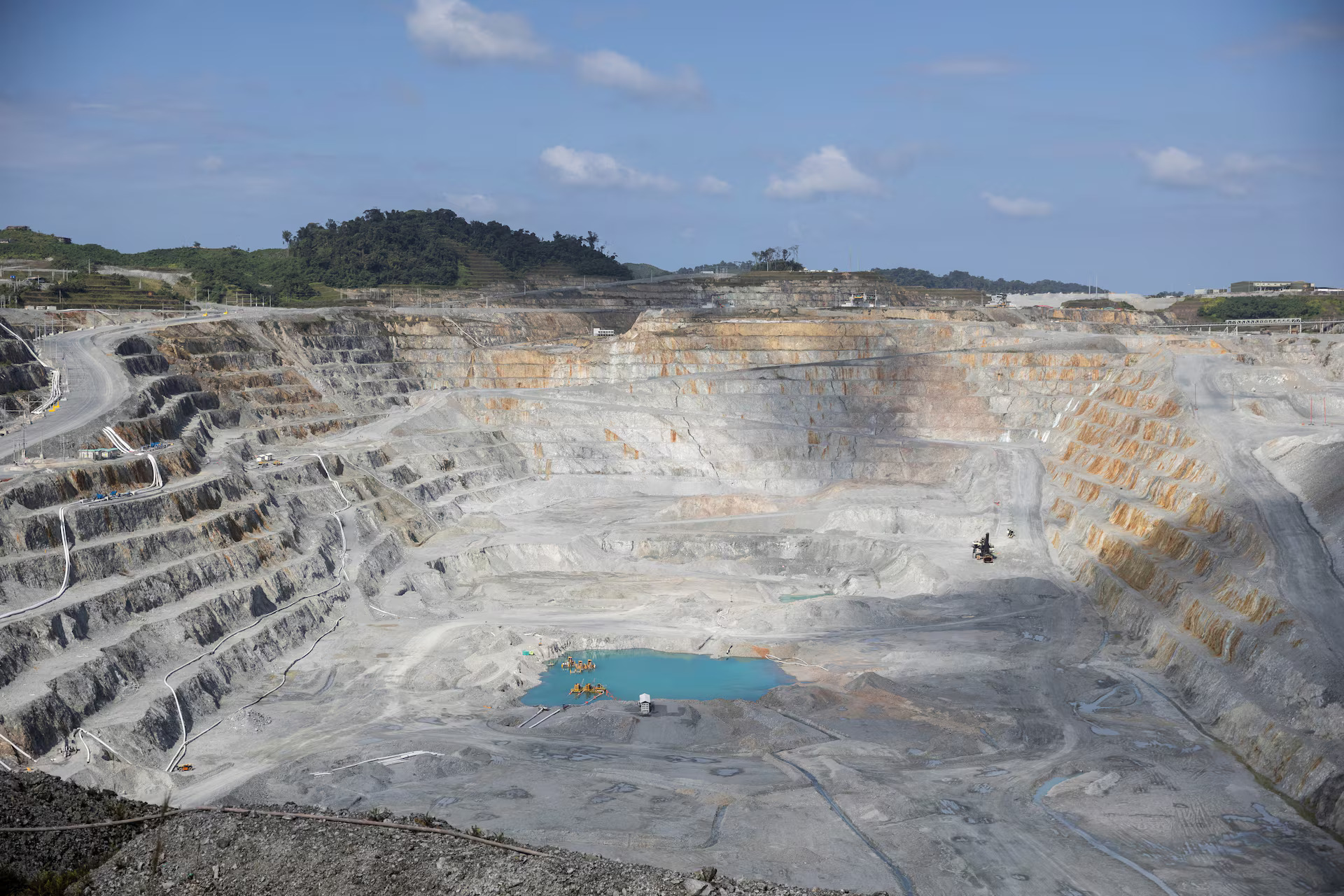
In 2023, Panama shut down one of the world’s most significant copper operations—the Cobre Panamá mine, operated by the Canadian firm First Quantum Minerals. The decision followed a Supreme Court ruling and widespread environmental protests, bringing a sudden halt to a site that once accounted for a meaningful share of global copper supply.
Now, in a carefully calibrated shift, the government is moving to unlock value from what remains.
Rather than reopening the mine outright, authorities are preparing to allow the removal and processing of already-extracted, stockpiled ore—a move that signals both economic pragmatism and political caution.
The Opportunity in the Stockpile
At the centre of this strategy is scale.
- Around 38 million tonnes of previously mined ore remain on site
- This material is estimated to yield roughly 70,000 tonnes of copper
If approved, the plan would allow the company to:
- Process and export the material over approximately one year
- Begin operations within three months of authorisation
This is not new mining. It is the monetisation of what has already been extracted—turning dormant assets into immediate economic output.
Jobs, Revenue, and a Managed Restart
The implications extend beyond copper volumes.
According to government and industry estimates:
- The initiative could create around 700 direct jobs, alongside existing staff
- Additional employment would emerge across logistics and support services
- Revenues from concentrate sales could help offset maintenance costs and support public spending
Panama has already tested this approach on a smaller scale, selling over 120,000 tonnes of copper concentrate and generating close to $30 million in royalties for infrastructure projects
In effect, the government is turning a suspended liability into a controlled economic asset.
A Political Balancing Act
What makes this decision significant is not just the economics—it is the positioning.
Panama is attempting to navigate three competing realities:
- Public opposition to mining, particularly around environmental impact
- Economic dependence on a sector that previously contributed up to ~5% of GDP
- Global demand for copper, driven by electrification and energy transition
Allowing stockpile processing offers a middle path:
- It avoids the optics of a full mine restart
- It reduces environmental risks tied to idle material
- It delivers near-term economic benefit without long-term commitment
Crucially, officials have emphasised that this step does not equate to reopening the mine.
Why Copper Matters Now
This move comes at a time when copper has become one of the most strategically important metals in the global economy.
It is essential for:
- Renewable energy systems
- Electric vehicles
- Power grids and electrification
With supply constraints tightening globally, even incremental volumes—like the 70,000 tonnes from Cobre Panamá—carry weight.
Before its closure, the mine supplied roughly 1% of global copper output
Its partial reactivation, even in this limited form, sends a signal to markets:
idle supply is being reconsidered.
Not a Restart—But a Signal
The larger question still hangs over Panama’s mining future.
A full decision on whether to restart the Cobre Panamá operation is expected in the coming months.
What this interim step reveals, however, is direction.
- Governments are becoming more pragmatic about resource extraction
- Economic pressures are reshaping environmental decision-making
- “All or nothing” approaches are giving way to phased, conditional strategies
A Transitional Strategy for a Transitional Industry
Panama’s approach is neither a reversal nor a continuation—it is something in between.
It reflects a broader shift happening across the global mining sector:
- Managing assets, not just operating them
- Extracting value without escalating risk
- Balancing domestic politics with global demand
In that sense, Cobre Panamá is no longer just a mine.
It is a case study in how countries are learning to navigate the tension between resource wealth, environmental accountability, and economic reality—not in theory, but in real time.