



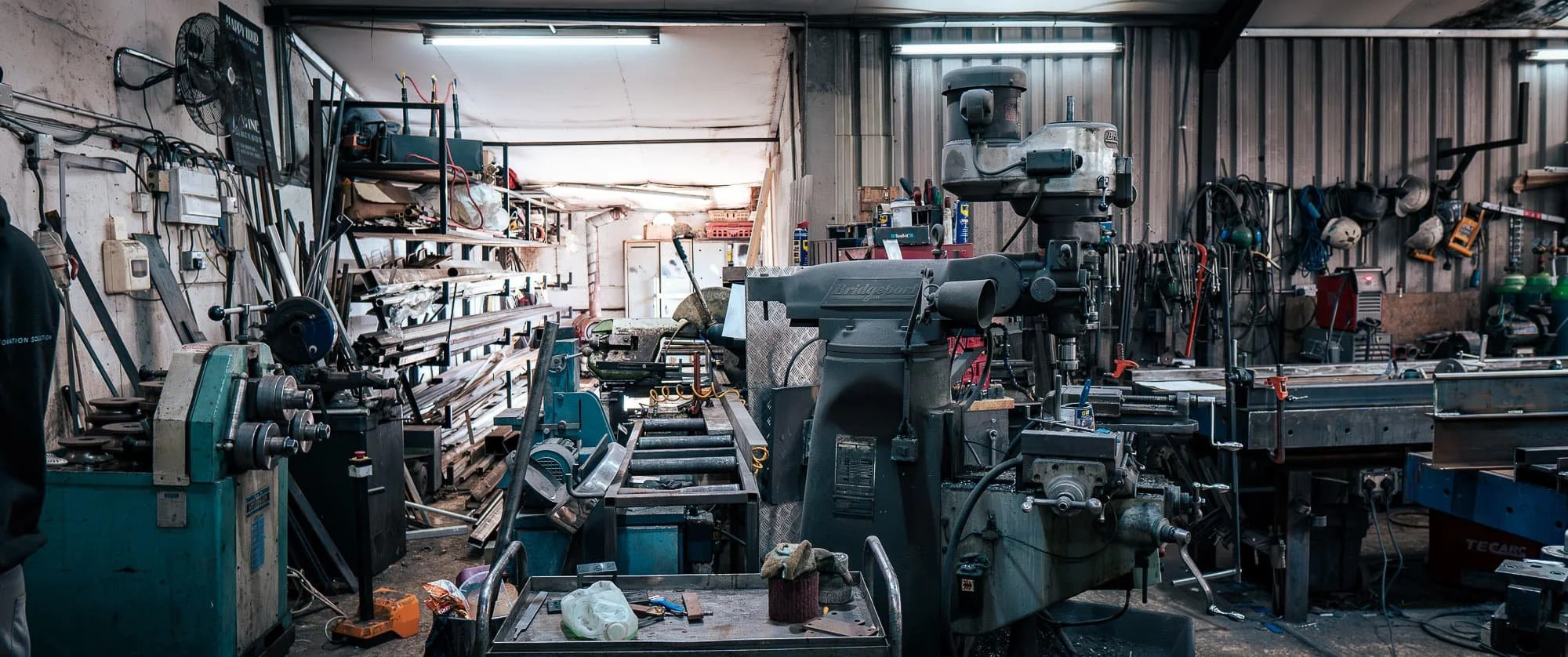
After nearly seven decades in operation, UK manufacturer Autostructures UK has entered administration—another signal of the mounting pressure facing Britain’s industrial base.
The company, which specialised in steel and aluminium structures and had been trading since 1958, has now been placed under the control of administrators while efforts are made to secure a buyer.
For now, operations continue and staff have been retained during the initial phase of the process—a standard approach designed to preserve value while a potential rescue or sale is explored.
But the underlying reality is harder to ignore: another long-established British manufacturer has reached a breaking point.
What Administration Really Mean
Administration is not immediate closure—but it is a critical moment.
It places a company under legal protection from creditors while specialists attempt to:
- Restructure the business
- Sell assets or the company as a going concern
- Preserve jobs where possible
In the case of Autostructures UK, the intention is clear: keep the business trading while a buyer is sought.
Whether that succeeds will determine if this is a temporary intervention—or the beginning of a permanent exit from the market.
The Bigger Picture: A Sector Under Strain
While the specific financial details behind this case remain limited, the broader context is well established.
Across the UK, manufacturing businesses—particularly those tied to heavy industry and materials—are facing a convergence of pressures:
- Rising energy costs, particularly acute for metal and fabrication sectors
- Supply chain instability, still reverberating from global disruptions
- Tighter financing conditions, making investment and recovery harder
- Softening demand, especially in construction-linked industries
Recent high-profile cases—from heritage pottery firms to engineering contractors—show that this is not an isolated incident, but part of a wider pattern affecting British manufacturing.
What was once cyclical pressure is increasingly structural.
Longevity Is No Longer Protection
There is something particularly telling about the age of the business.
Founded in 1958, Autostructures UK survived decades of economic cycles, industrial change, and global competition. Yet longevity alone has not been enough to shield it from today’s environment.
That reflects a deeper shift.
Modern industrial challenges are not just about competition—they are about:
- Cost structures that have fundamentally changed
- Globalisation that has reshaped supply chains
- Energy and sustainability pressures that redefine viability
In that context, even established firms are vulnerable.
What Happens Next
The next phase will be decisive.
Administrators will attempt to:
- Identify potential buyers
- Secure investment
- Maintain operational continuity
If successful, the company may emerge under new ownership—often leaner, restructured, and repositioned.
If not, the outcome is more familiar: asset sales, job losses, and closure.
A Quiet Warning for UK Industry
This story will not dominate headlines in the way major corporate collapses do.
But it carries weight.
Because it reflects a pattern repeating across the UK’s industrial landscape—where long-standing, mid-sized manufacturers are increasingly exposed to forces that are both global and structural.
Autostructures UK is one company.
But the question it raises is much larger:
How many more can absorb the pressure before the system itself begins to shift?
And whether British manufacturing, in its current form, is being reshaped not gradually—but in real time.