



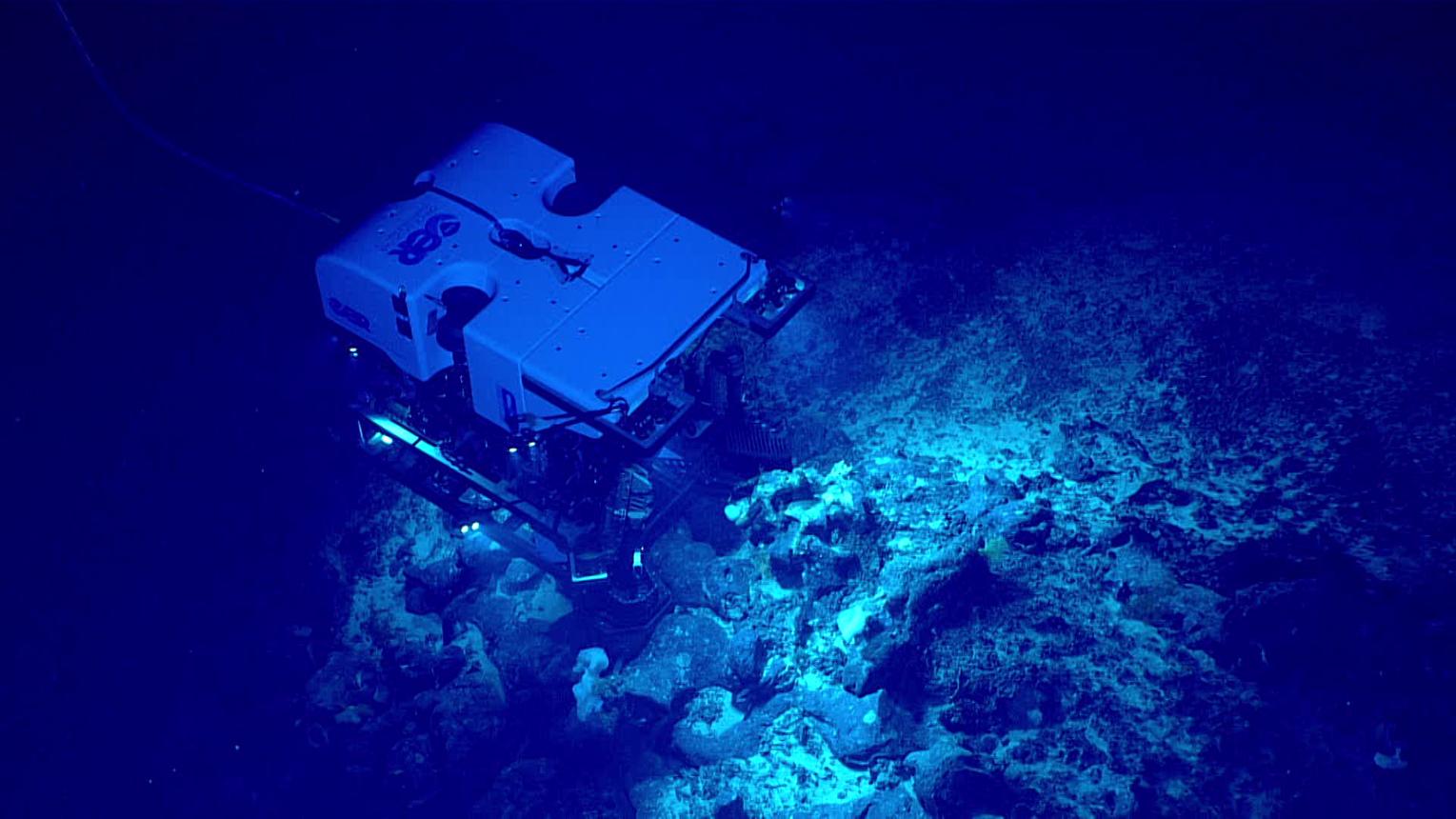
Thousands of metres beneath the Pacific Ocean, in one of the least explored environments on Earth, scientists have uncovered something that could fundamentally reshape the future of deep-sea mining: an ecosystem far richer, more complex, and more fragile than previously understood. What began as a research mission driven by the global demand for critical minerals has instead revealed a hidden world teeming with life, forcing a reassessment of what is truly at stake.
The discovery took place in the Clarion-Clipperton Zone, a vast stretch of abyssal seabed between Mexico and Hawaii, long targeted for its abundance of polymetallic nodules rich in metals essential for batteries and renewable technologies. Over the course of five years and 160 days at sea, researchers conducted one of the most extensive deep-sea observation campaigns ever undertaken, aiming to evaluate both biodiversity and the environmental impact of potential mining activity.
Life in the Dark
What they found challenges long-standing assumptions about the deep ocean. At depths of around 4,000 metres, where sunlight never reaches and nutrients are scarce, scientists identified 788 distinct species from over 4,000 collected organisms, many of them previously unknown to science. These included a diverse array of polychaete worms, crustaceans, and molluscs, forming a complex ecosystem thriving under extreme conditions.
This level of biodiversity is striking not only for its scale, but for what it reveals about how little is understood. In environments once considered sparse and lifeless, the abyss instead appears densely populated with specialised organisms adapted to a slow, stable, and highly sensitive ecosystem. Estimates suggest that thousands more species in the region remain undiscovered or undocumented, underscoring the vast scientific blind spot that still exists beneath the ocean’s surface.
Mining Meets Reality
The timing of this discovery is critical. Deep-sea mining has been gaining momentum as nations and corporations look to secure supplies of cobalt, nickel, and other metals vital to the global energy transition. The seabed, particularly in regions like the Clarion-Clipperton Zone, is seen as a potential solution to terrestrial resource constraints.
Yet the same research that revealed this biodiversity also tested the impact of mining activity, and the results are sobering. Areas disturbed by experimental mining equipment experienced a 37% decline in animal abundance and a 32% drop in species diversity, with visible scars left on the seafloor.
These findings highlight a fundamental tension. The resources needed to power a greener future may lie in environments that are themselves both irreplaceable and barely understood. Once disrupted, these ecosystems may take decades, or longer, to recover, if they recover at all.
A Debate Reignited

The implications extend far beyond science. This discovery is likely to intensify an already growing debate over whether deep-sea mining should proceed at all. Environmental groups have long warned of irreversible damage, while industry advocates argue that seabed extraction could reduce the environmental burden of land-based mining.
What has changed is the weight of evidence. The abyss is no longer an abstract, empty frontier. It is a living system, rich in biodiversity, much of which has yet to be named, studied, or understood. With more than 90% of species in some deep-sea regions still undescribed, the risk is not just environmental degradation, but the potential loss of entire ecosystems before they are even discovered.
A Turning Point Beneath the Surface
What emerges from this research is not a simple argument for or against deep-sea mining, but a more profound realisation: humanity is on the verge of industrialising one of the last truly unknown environments on Earth. The question is no longer just what can be extracted, but what might be lost in the process.
The abyss, once imagined as empty and inert, is revealing itself as something far more intricate and alive. And in doing so, it is forcing a pause, a reconsideration of priorities, and perhaps a redefinition of progress itself.
In the race to secure the materials of the future, the deepest parts of our planet are reminding us that they are not resources alone. They are ecosystems, still largely hidden, and not easily replaced.