




The UK is taking another decisive step toward making fusion energy a commercial reality, with the launch of a cutting-edge research project focused on developing materials capable of surviving the most extreme environments on Earth.
Fusion promises clean, abundant and low-carbon energy — but before it can power homes and cities, scientists must solve one of its biggest challenges: how to build components that can withstand intense heat, radiation and neutron bombardment inside a working fusion reactor.
This new initiative aims to do exactly that.
Why fusion needs new materials
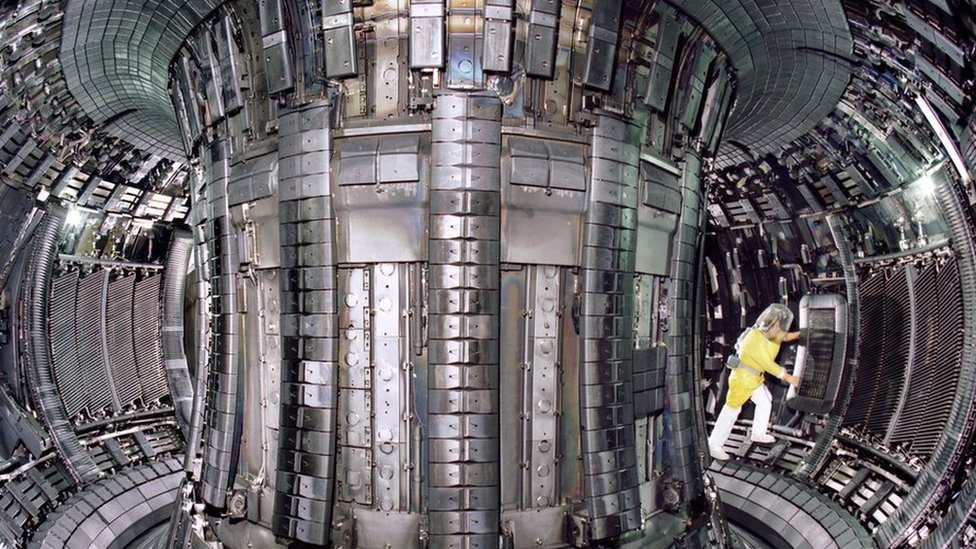
Fusion reactors operate under conditions that push conventional engineering materials far beyond their limits. Internal components are exposed to temperatures hotter than the surface of the sun, extreme thermal cycling and constant particle bombardment. Even materials used in aerospace and nuclear fission struggle in such an environment.
To move fusion from experimental facilities to reliable power stations, entirely new material solutions are required — ones that combine heat resistance, durability and thermal conductivity at a level never previously achieved.
Engineering metals at the microscopic level
At the centre of the project is a focus on advanced additive manufacturing, using next-generation metal 3D printing techniques to engineer materials layer by layer. Rather than relying on traditional alloys, researchers are developing multi-metal “metamaterials” with precisely controlled internal structures.
One key challenge being tackled is how to combine tungsten, valued for its exceptional heat resistance, with copper, prized for its ability to conduct heat away quickly. These two metals behave very differently under stress, making them difficult to join using conventional manufacturing methods.
By using multi-metal laser powder bed fusion, scientists can create gradual transitions between materials, reducing cracking and structural weakness while improving performance under extreme conditions.
Built for the harshest parts of a reactor
The materials being developed are intended for plasma-facing components — the parts of a fusion reactor that sit closest to the reaction itself and take the full force of the energy released.
These components must withstand:
- Extremely high heat flux
- Strong magnetic fields
- Continuous neutron exposure
- Rapid thermal expansion and contraction
The project’s goal is to create materials that not only survive these conditions, but remain stable and reliable over long operational lifetimes.
A collaboration across science and industry
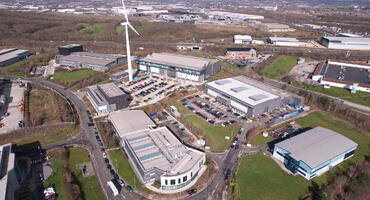

The initiative brings together leading UK universities, national fusion research bodies and industrial partners, combining academic insight with real-world engineering expertise. This collaborative approach is designed to ensure that breakthroughs made in the lab can be translated into manufacturable, scalable components for future fusion power plants.
Beyond fusion, the techniques being developed could have wider applications across aerospace, defence, advanced manufacturing and energy infrastructure, where materials must perform reliably under extreme stress.
Supporting the UK’s fusion ambitions
The project aligns with the UK’s long-term ambition to lead the global race toward commercial fusion energy. Prototype fusion power plants planned for the coming decades will depend heavily on breakthroughs like this to reduce risk, improve reliability and lower costs.
While fusion is often described as “the energy of the future”, progress in materials science is turning that future into something far more tangible.
A step closer to clean, limitless energy
Fusion has the potential to transform global energy systems — offering power without carbon emissions, long-lived radioactive waste or fuel scarcity. But its success depends on engineering solutions as much as scientific ones.
By rethinking how materials are designed, manufactured and combined at the microscopic level, this new UK project represents a crucial step toward unlocking fusion’s promise — and positioning the UK at the forefront of one of the most important technological challenges of the century.